cyxCoder
明天你会感谢今天奋力拼搏的你。
ヾ(o◕∀◕)ノヾ
Spring容器注册的源码分析
2020-02-18 11:12
1369
0
ApplicationContext context = new AnnotationConfigApplicationContext(MySpringConfig.class);

* Create a new AnnotationConfigApplicationContext, deriving bean definitions
* from the given component classes and automatically refreshing the context.
* @param componentClasses one or more component classes — for example,
* {@link Configuration @Configuration} classes
*/
public AnnotationConfigApplicationContext(Class<?>... componentClasses) {
this();//初始化类
register(componentClasses);//对配置类进行注册
refresh();//手动刷新
}
- 读取注解bean信息读取类(AnnotatedBeanDefinitionReader);
- bean类扫描器(ClassPathBeanDefinitionScanner);
源代码如下:


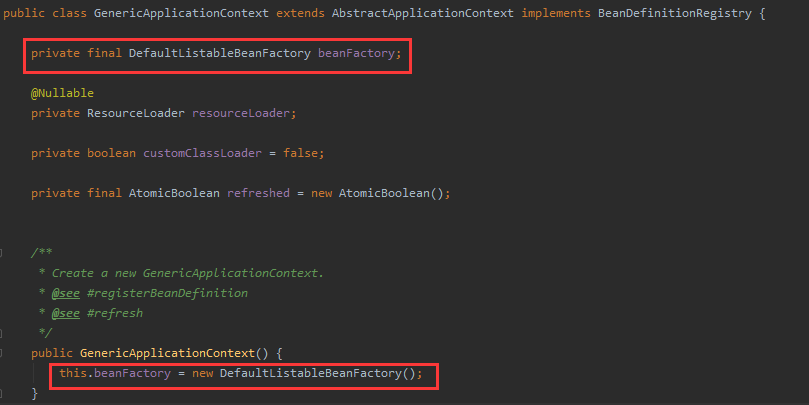



@Nullable Class<? extends Annotation>[] qualifiers, @Nullable Supplier<T> supplier,
@Nullable BeanDefinitionCustomizer[] customizers) {
//注解方式启动的配置类 注入IOC bean信息(即为@Configuration注解的类注入容器)
AnnotatedGenericBeanDefinition abd = new AnnotatedGenericBeanDefinition(beanClass);
//判断注解配置类是否使用条件注册(即符合@Condition注解的条件)
if (this.conditionEvaluator.shouldSkip(abd.getMetadata())) {
return;
}
//设置回调方式
abd.setInstanceSupplier(supplier);
//判断config类上是否有加上@scope作用域
ScopeMetadata scopeMetadata = this.scopeMetadataResolver.resolveScopeMetadata(abd);
//设置scope
abd.setScope(scopeMetadata.getScopeName());
//有beanName用beanName,没有生成一个
String beanName = (name != null ? name : this.beanNameGenerator.generateBeanName(abd, this.registry));
//对一些通用注解进行处理:Lazy、Primary、DependsOn、Role、Description
AnnotationConfigUtils.processCommonDefinitionAnnotations(abd);
if (qualifiers != null) {
for (Class<? extends Annotation> qualifier : qualifiers) {
if (Primary.class == qualifier) {
abd.setPrimary(true);
}
else if (Lazy.class == qualifier) {
abd.setLazyInit(true);
}
else {
abd.addQualifier(new AutowireCandidateQualifier(qualifier));
}
}
}
//有没有给BeanDefinition的回调,有就加上
if (customizers != null) {
for (BeanDefinitionCustomizer customizer : customizers) {
customizer.customize(abd);
}
}
//注册配置类
BeanDefinitionHolder definitionHolder = new BeanDefinitionHolder(abd, beanName);
definitionHolder = AnnotationConfigUtils.applyScopedProxyMode(scopeMetadata, definitionHolder, this.registry);
BeanDefinitionReaderUtils.registerBeanDefinition(definitionHolder, this.registry);
}



全部评论